Embroidery thread — the six-strand divisible cotton floss used in almost every counted cross-stitch and surface embroidery pattern — is one of the cheapest materials in craft. Individual skeins start at under two dollars. And yet, thread organisation is consistently cited as one of the biggest friction points for stitchers at every level. Tangled floss eats time. Missing a single colour mid-project means a trip to a craft store that may no longer carry the full DMC range. And a shoebox of unlabelled skeins is, functionally, useless. This guide covers the full organisational pipeline: how DMC’s numbering system works and why it matters, how to wind and store thread properly, what to look for in large kit purchases, and the tradeoffs serious stitchers actually weigh when they’re building a working collection. If you’ve recently received a 100- or 200-colour kit and you’re staring at a pile of loose floss wondering where to begin, this is where to start.
| EDITOR'S PICK[BYMORE 262 Pack Embroidery Thre…](https://www.amazon.com/dp/B07WD3VTTD?tag=greenflower20-20) | Mid-tier[Similane Embroidery Kit 215 Pcs](https://www.amazon.com/dp/B07Y34TW2W?tag=greenflower20-20) | Budget pick[Mudder 53 Pieces Cross Stitch T…](https://www.amazon.com/dp/B084T4PTN7?tag=greenflower20-20) | |
|---|---|---|---|
| Thread colors | 200 | 100 | — |
| Storage box | ✓ | ✗ | ✗ |
| Total pieces | 262 | 215 | 53 |
| Hoop included | ✗ | ✓ | ✓ |
| Material type | — | — | Bamboo |
| Tool count | 62 | — | — |
| Price | $26.99 | $21.99 | $14.49 |
| See on Amazon → | See on Amazon → | See on Amazon → |
Why DMC Codes Are the Load-Bearing Piece of the Whole System
DMC (Dollfus-Mieg & Compagnie, the French thread manufacturer whose numbering system has become the global standard for embroidery patterns) assigns every colour in its range a unique number — 310 for black, 3865 for near-white, 321 for a classic red, and so on up through roughly 500 colours in the current full range. When a pattern calls for DMC 3750, that number is doing real work: it’s specifying a very particular dark navy that is meaningfully different from 336 or 823. Lose the label, and that specificity is gone.
This is why the coding question matters so much when you’re buying a large kit. Reviewers of budget 100–200 colour sets — the kind sold in zippered cases on Australian marketplaces and through online craft retailers — consistently flag two things: whether the threads are labelled with DMC-equivalent codes, and whether the codes are accurate. A well-coded budget kit is genuinely useful for pattern work, even if the thread itself isn’t DMC brand. An unlabelled one, no matter how pretty, is essentially decorative stock.
The DMC Corporation’s own printed Color Card (2025 edition) is the reference document here. It shows every colour with its number, a printed swatch, and the full thread name. Serious stitchers often keep one on hand specifically for cross-referencing substitutes. Jacksons Art’s buyer’s guide to thread quality notes that DMC-equivalent coding on third-party threads is meaningful only when the manufacturer has done an actual colour-match — something that varies considerably across kit brands.
By the numbers:
- DMC’s full cotton floss range: ~500 colours
- Typical budget 200-colour kit coverage: roughly 40% of the DMC range
- Duplicate whites and blacks in large kits: commonly 3–6 near-identical pale/dark shades
- Recommended bobbin winding time for 100 colours: 2–3 hours (one-time setup cost)
Building a Storage System That Survives Real Use
The standard method that working stitchers converge on — and that Artists Network’s embroidery basics resources describe as the most durable long-term approach — is the plastic bobbin system. You wind each skein onto a flat plastic bobbin (usually 55mm x 35mm), write or print the DMC code on the bobbin’s label panel, then file the bobbins numerically in a divided storage box.
The appeal is obvious once you’ve done it: bobbins don’t tangle, the label is always visible, and pulling a single strand from a wound bobbin is dramatically easier than fighting a loose skein. Several reviewers of the YITOHOP storage case format note that the case’s compact footprint — it “fits in small places,” as one owner puts it — is a genuine daily-use benefit, not just a marketing line. For stitchers who work in small apartments, at a kitchen table, or who carry their project to classes, this matters.
The alternative that some intermediate stitchers prefer is the binder-and-bag system: each colour goes into a small resealable bag with the code written on it, bags are punched and filed in a ring binder. It’s bulkier than a bobbin case but faster to set up if you’re dealing with a large kit dump all at once. The tradeoff is that loose floss in a bag can still tangle at the retrieval end.
A few practical rules that hold across systems:
Wind with intention. When winding a skein onto a bobbin, leave a 5–7cm tail loose rather than tucking the end under the wound thread. This tail is what you pull when you need a strand — threading it under the wound layers is what causes the tangling that drives stitchers to distraction.
Code first, store second. When you receive a new kit, the single most valuable thing you can do before you touch a needle is write the DMC code on every bobbin or bag before you wind anything. If the codes come printed on the skein labels, transfer them before the labels fall off — they will fall off.
Separate metallic threads immediately. Metallics behave differently from cotton floss (more on this below) and benefit from being stored in a separate section or container rather than filed by number alongside cotton.
What to Actually Expect from Budget 100–200 Colour Kits
The large pre-packaged kits sold by brands like BYMORE, Similane, INSCRAFT, and ATTERET occupy a genuinely useful space in the market — they’re how many intermediate stitchers build a working palette without spending $400 on individual DMC skeins. But they come with specific limitations worth naming clearly.
Thread quality vs DMC. The Craft Council of Australia’s 2024 textile participation report notes that Australian embroiderers are increasingly sourcing thread online due to the reduction of in-store specialty ranges — a trend stitchers themselves confirm. One BYMORE reviewer notes their local craft store has “all but discontinued” DMC stock, which makes online kits a practical necessity rather than just a budget choice. That same reviewer counted all 200 colours on arrival, which is exactly the right approach. Across aggregated reviews, the pattern on Similane and INSCRAFT kits is consistent: vibrant, well-matched colours, but a quality gap in strand separation versus true DMC. DMC’s manufacturing produces a smoothly twisted six-strand thread that separates cleanly into individual strands. Budget equivalents are often slightly rougher in twist, which makes strand separation harder — a small friction that compounds across a long project. This doesn’t make them unusable; it means your technique adjusts slightly.
Duplicate neutrals. Multiple reviewers of 200-colour kits flag the duplication of near-white and near-black shades as the least valuable addition to the collection. Three shades of off-white occupy bobbin slots that could theoretically be three more useful midtones. This is worth knowing before you buy: if near-neutrals are critical to a specific project, check the specific colour list before purchasing rather than assuming 200 colours covers your pattern’s DMC calls.
Storage case durability. ATTERET reviewers describe the bag material as “thick and durable” with no zipper failures even when fully loaded. Across reviews, the zippered case formats from established kit brands hold up reasonably well — the weak points are usually the internal dividers for holding bobbins in place, which can loosen over time.
Metallic Threads: Worth the Trouble or Not?
Metallics in mixed kits are a genuine tradeoff, and intermediate stitchers deserve a straight answer: they’re more trouble than standard cotton floss, full stop. The reasons are physical. Metallic thread is typically a core filament wrapped in a metallic film or flat foil wrap. It frays at the needle eye, knots more readily than cotton, and the coating can shred on rough fabric. Jacksons Art’s thread buyer’s guide notes that metallic thread works best in short lengths (no more than 30cm in the needle at once) and with a needle eye large enough to avoid friction.
The kits that include metallics are not misrepresenting their value — a gold or silver highlight thread genuinely elevates certain project types, particularly ornaments, botanical work, and any design with decorative lettering. The practical recommendation: treat the metallics in your kit as specialty stock, not everyday floss. Store them separately, use a dedicated needle for them, and accept that they require slower stitching.
Frequently Asked Questions
Are the threads in budget 100–200 colour kits actually DMC brand, or just coded to match DMC numbers? Almost universally, the threads in large budget kits are not DMC brand — they are manufactured independently and assigned DMC-equivalent codes by the kit maker. Quality varies: some closely match the DMC swatch; others drift, particularly in darker saturated colours. The DMC Color Card is the ground-truth reference for comparing.
How do you prevent embroidery floss from tangling in storage? Wind skeins onto flat plastic bobbins with a loose tail left free for pulling. Store bobbins vertically in a divided box rather than loose in a bag. Never store partially used thread by wrapping it around the skein — it will tangle every time.
What is the best way to organise 100+ thread colours when you receive them? Number first. Before winding a single strand, transfer every DMC code from the skein label to the bobbin or bag. Then wind, then file numerically. A one-time three-hour investment removes every future friction point. Artists Network’s embroidery guides consistently endorse the numerical DMC filing system over colour-family grouping — patterns call by number, not by visual family.
Do metallic threads in mixed kits work well or are they more trouble than they are worth? They work, but they require technique adjustment: shorter lengths, a larger-eyed needle, and slower stitching. For occasional accent use, they’re worth keeping. For a project with significant metallic coverage, invest in purpose-made metallic thread from a specialist supplier rather than relying on kit inclusions.
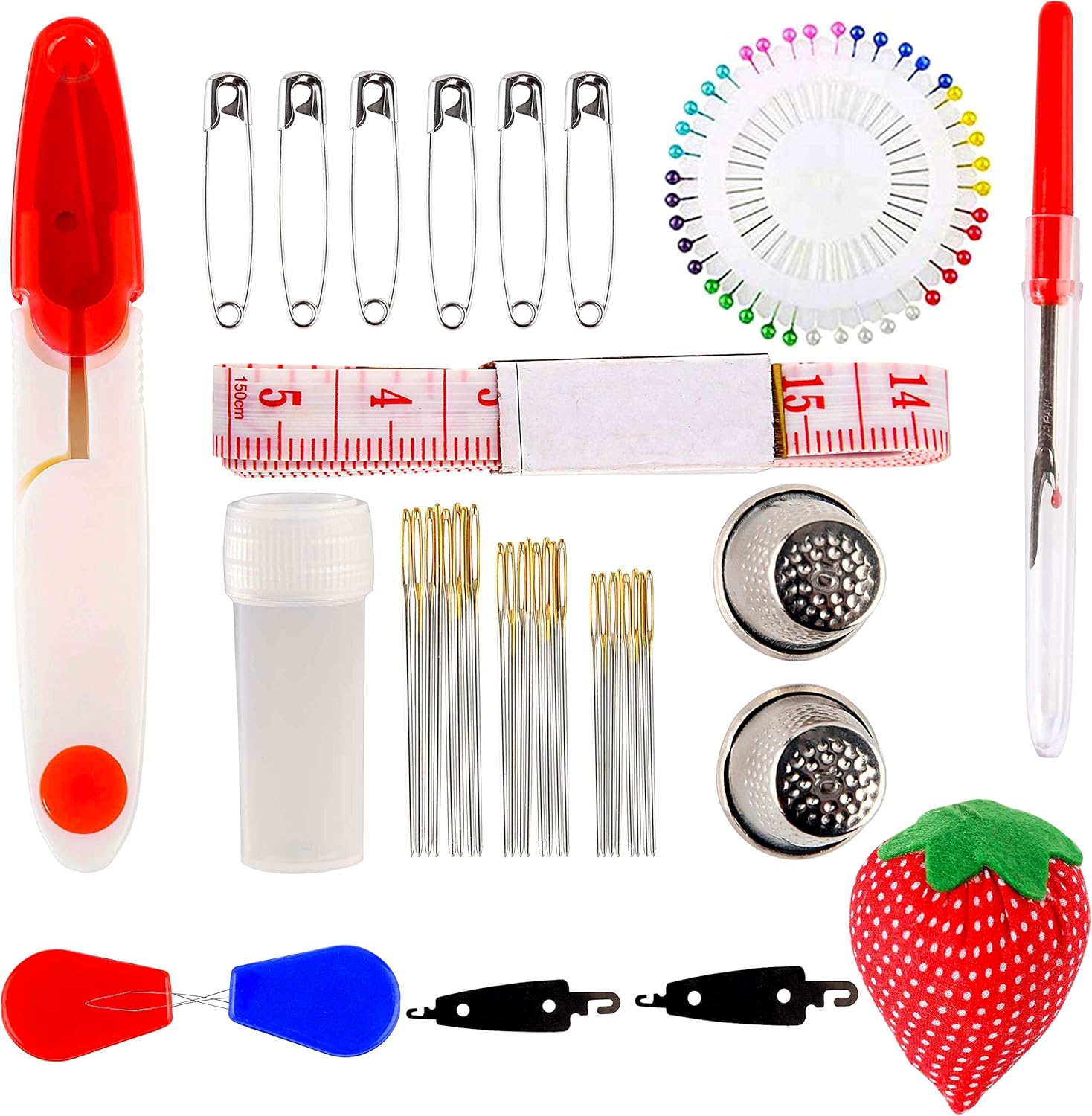
What accessories should every embroiderer have beyond just thread and a hoop? A needle case with needles in multiple sizes (tapestry 24–26 for counted work, crewel 7–9 for surface embroidery), small embroidery scissors with fine tips, a needle threader, and a colour card or printed DMC reference. Beyond that: a daylight lamp for colour-matching and detailed work, and a bobbin winder if you’re processing a large kit.
How do you know which DMC colours to buy when a pattern calls for a specific number you don’t have? The DMC Color Card lists every colour with its number and shows adjacent colours in the palette sequence. For close substitution, choose a colour within the same family number range — DMC groups families sequentially (e.g., the 3750–3760 range is mostly deep blues and blue-greens). Online DMC colour conversion tools, which several embroidery supply retailers host on their sites, also allow you to identify the nearest available match if a colour is out of stock.
The Decision Frame: Which System for Which Stitcher
If you’re processing your first large kit and want a system that will hold for years: bobbins in a numbered box, codes transferred before winding, metallics in a separate pouch. One afternoon of setup, effectively zero friction after that.
If you already have a working collection and you’re evaluating whether a 100–200 colour budget kit adds real value: yes, if your local DMC supply has thinned out (a documented trend, per the Craft Council of Australia’s 2024 report) and you’re willing to accept a slight quality differential on strand separation. No, if the specific pattern colours you need are in the DMC range above 4000 (the variegated and specialty lines, which budget kits rarely include).
If the question is DMC brand versus budget-coded equivalent for a serious long-term project: DMC brand is worth the premium where colour accuracy and strand quality will affect the finished piece. Budget kits are a legitimate working palette for practice, sampling, and projects where slight colour variation is acceptable. That’s not a compromise — it’s just an honest tradeoff.