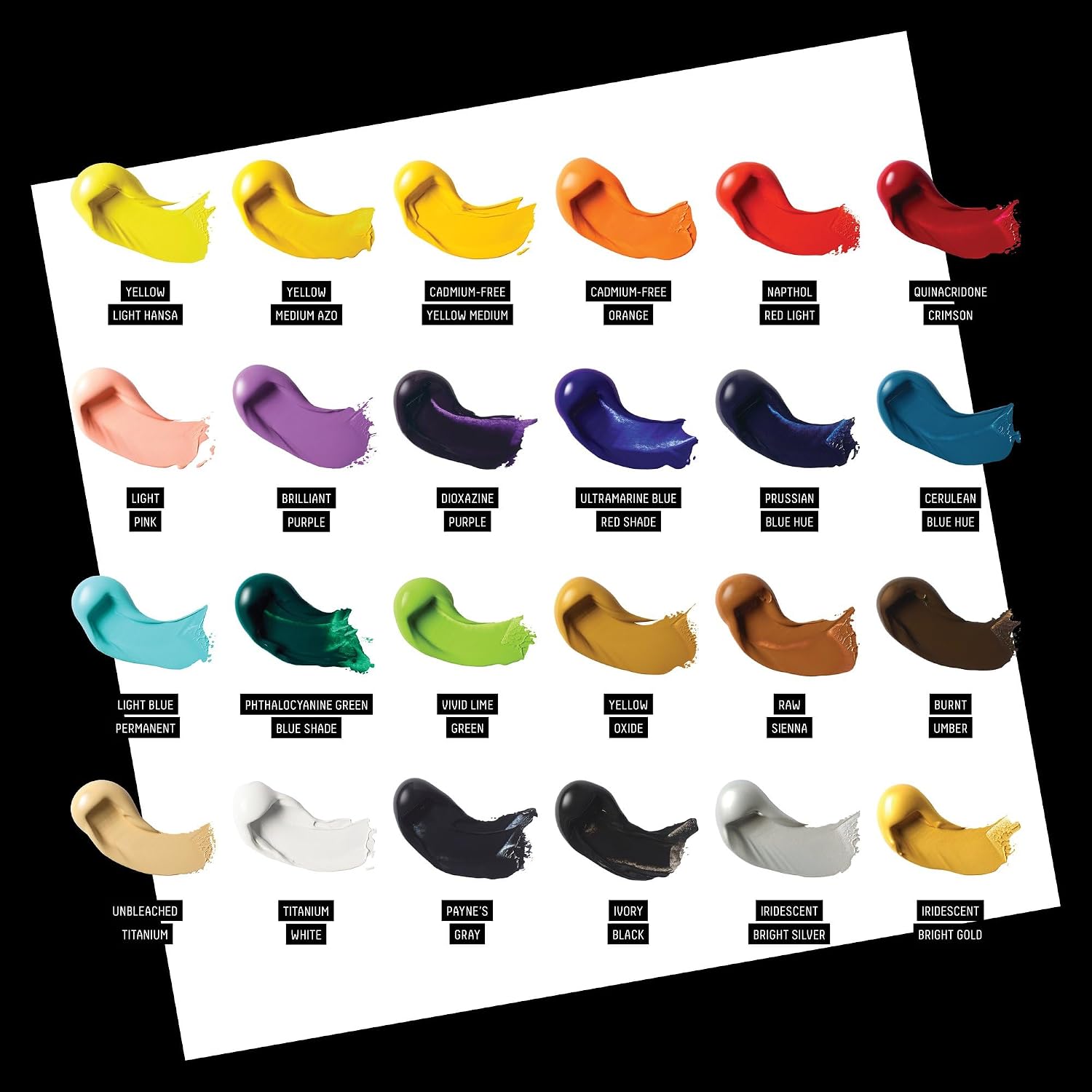
If you’ve been painting with student-grade acrylics and you’re ready to spend more intentionally, the first thing you’ll hear is: go professional. But that recommendation immediately forks into two very different products — heavy body and soft body acrylics — and nobody always explains what that means before pointing you at a $300 set. Here’s the plain version: acrylic paint is a pigment suspended in an acrylic polymer medium, essentially a water-based plastic binder. The “body” refers to thickness. Heavy body paint is thick, like butter straight from the fridge — it holds brushstrokes, knife marks, and texture. Soft body is the consistency of thickened cream — it levels out, blends smoothly, and flows across a surface without leaving ridges. Both are professional-grade. The choice is not about quality; it’s about what you’re trying to make. This guide will tell you which one fits your current work, compare the leading sets available in Australia in 2026, and give you the per-tube math to make the spend feel justified.
What the Consistency Difference Actually Means at the Easel
The body distinction isn’t just tactile preference — it drives technique.
Heavy body (sometimes called “high viscosity”) holds peaks and ridges when you apply it. That’s the material choice if you’re building impasto texture, using palette knives, working wet-into-wet without colours running together, or building glazes with a thick, luminous quality. Golden Artist Colors, in its Heavy Body Acrylic product specification sheets, describes the consistency as designed to “retain peaks and brushstrokes” — the standard the broader industry benchmarks against. Liquitex Professional Heavy Body follows a similar standard. Both carry excellent lightfastness ratings — ASTM I or II across the core pigment range — which matters if your work is destined for sale, exhibition, or long-term collection.
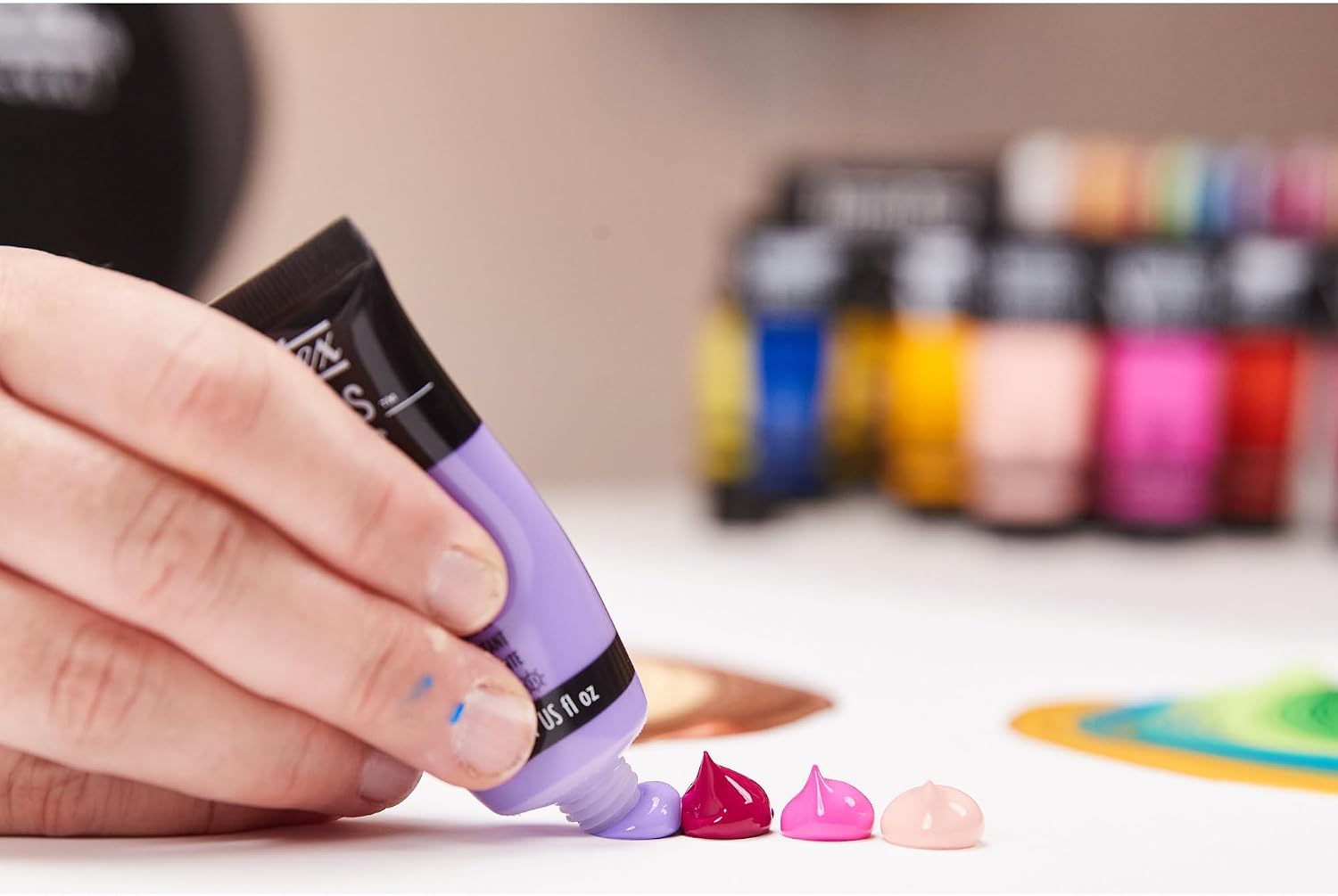
Soft body (sometimes called “low viscosity,” or “fluid” at the thinnest end) is the right choice when you want smooth blends, fine detail work, illustration-style painting, watercolour-adjacent washes, or airbrushing. It also mixes more readily into mediums — pouring mediums, glazing liquids — without needing the extra thinning step that heavy body requires. Liquitex Professional Soft Body is the most widely stocked option in Australia. Atelier Interactive, an Australian-made brand formulated by Chroma in New South Wales, occupies a clever middle ground: it has a soft-body feel but includes a proprietary “open” medium system that keeps paint workable far longer than standard acrylics before it skins over, which working artists consistently flag as a genuine differentiator for blending.
The rule most experienced painters arrive at: if you primarily use brushes and value smooth colour transitions, start with soft body. If texture, palette knife work, or dimensional mark-making is central to your practice, heavy body is the right starting point.
AU Price Comparison: The Sets Worth Considering in 2026
Australian pricing for professional acrylics sits roughly 20–35% above equivalent UK retail — a gap driven by import freight, GST, and smaller wholesale volumes. According to the Jackson’s Art Supplies acrylic paint buying guide (jacksonsart.com), the UK retail baseline for professional sets provides a useful cross-reference, though Australian buyers should factor those additional costs into any direct comparison. The gap has narrowed as the AUD has held above USD 0.63 through mid-2026, but it remains a real consideration in your budget planning.
Heavy Body Options
Golden Heavy Body 10 × 59ml
Liquitex
$61.89
In stock on Amazon
Check price on AmazonGolden Heavy Body commands a price premium for defensible reasons: an extraordinarily broad single-pigment colour range of over 110 colours, deep technical documentation, and a reputation as a benchmark product among fine artists worldwide. The Artists Network article “Choosing the Right Acrylic Consistency” (artistsnetwork.com) notes Golden’s ASTM lightfastness documentation as among the most thorough available from any acrylic manufacturer. For artists selling work into galleries or submitting to prize exhibitions, Golden’s provenance is recognised by assessors and collectors.
- Approx. AU RRP: $175–$200 for 10 × 59ml
- Per-tube cost: ~$17–$20
- Best for: Fine artists, gallery-focused practice, makers prioritising pigment depth and documentation
Stock outside Sydney and Melbourne can be variable in bricks-and-mortar stores; Art Shed Online and Walker Ceramics (Melbourne) carry the full Golden range and ship nationally.
Liquitex
$61.89
In stock on Amazon
Check price on AmazonMatisse Structure Formula 10 × 75ml (Australian-made)
Winsor
$34.07
In stock on Amazon
Check price on AmazonMade by Derivan in New South Wales, Matisse Structure Formula is frequently overlooked in online forums dominated by US and UK voices, but it competes directly with Golden and Liquitex on pigment load and lightfastness. The Artists Network buying guide and aggregated practitioner reviews consistently note Matisse Structure’s strong handling in mixed-media contexts. Buying Australian-made here is not only a values choice — it is often a stock-reliability choice. Matisse is available through Walker Ceramics, Art Shed Online, and Eckersley’s nationally, with shorter lead times than imported stock.
- Approx. AU RRP: $130–$150 for 10 × 75ml
- Per-tube cost: ~$13–$15
- Best for: Intermediate practitioners building a studio practice who want reliable restocking and competitive pricing
Winsor
$34.07
In stock on Amazon
Check price on AmazonLiquitex Professional Heavy Body 12 × 59ml
Mont
$23.99
In stock on Amazon
Check price on AmazonLiquitex Professional Heavy Body sits between Golden and Matisse on price, broadly available at Eckersley’s and Riot Art & Craft nationally. It is entirely capable for most intermediate practice and aligns most closely with the products referenced in international YouTube tutorials and online instruction — useful when you’re learning from global sources and want to replicate results directly.
- Approx. AU RRP: $145–$165 for 12 × 59ml
- Per-tube cost: ~$12–$14
- Best for: Intermediate painters who want reliable heavy body performance at accessible pricing with national in-store availability
Mont
$23.99
In stock on Amazon
Check price on AmazonSoft Body and Open-Formula Options
Liquitex Professional Soft Body 12 × 59ml
Winsor
$34.07
In stock on Amazon
Check price on AmazonLiquitex Professional Soft Body is the default soft body recommendation for intermediate makers in Australia: excellent pigment quality, widely stocked, and the most comparable pricing to what international instruction references. The Jackson’s Art Supplies acrylic buying guide (jacksonsart.com) describes soft body acrylics as the preferred format for smooth blending, layering, and mixed-media applications — all hallmarks of illustration-adjacent and detail-focused practice.
- Approx. AU RRP: $140–$160 for 12 × 59ml
- Per-tube cost: ~$12–$13
- Best for: Illustration, detailed realism, smooth abstraction, mixed-media layering
Winsor
$34.07
In stock on Amazon
Check price on AmazonAtelier Interactive 12 × 80ml
Liquitex
$61.89
In stock on Amazon
Check price on AmazonAtelier Interactive solves a specific and significant problem: open working time. Standard acrylics skin over in 15–30 minutes in typical Australian studio conditions — and in summer in Brisbane or Perth, that window can be closer to 10 minutes. Atelier’s proprietary unlock medium extends that window substantially. Artists who have made the switch consistently report being able to re-wet and blend passages hours after initial application, which changes the character of working with acrylics fundamentally. If you are transitioning from oils and finding acrylic’s fast dry time frustrating, this is the set to try before giving up on the medium entirely.
- Approx. AU RRP: $155–$175 for 12 × 80ml
- Per-tube cost: ~$13–$15
- Best for: Oil painters transitioning to acrylics, makers whose practice depends on extended blending time
Liquitex
$61.89
In stock on Amazon
Check price on AmazonThe Decision Framework: Which Set for Which Maker
This is the part most buying guides skip — the actual if/then logic.
If you’re building texture-forward work — palette knife landscapes, impasto florals, dimensional abstracts — go heavy body, and go Golden or Matisse Structure. The per-tube premium on Golden is justified if your work sells into galleries. Matisse Structure is the smart local alternative if you’re building a studio practice and value restocking reliability. Liquitex Professional Heavy Body sits between both: slightly less expensive, broadly available nationally, and entirely capable for intermediate practice.
If your work is illustration, detailed realism, smooth abstraction, or mixed-media layering, soft body is the right tool. Liquitex Professional Soft Body is the default recommendation: excellent pigment quality, widely stocked, and the most comparable to what international tutorials reference when they show finished results. Atelier Interactive is the upgrade if blending time is your primary frustration.
If you’re not sure yet — which is a completely reasonable position after 6–24 months of serious practice — consider buying one heavy body set and one soft body set in a smaller configuration (6 colours each), working from a limited palette, and letting your working preferences reveal themselves over three to six months. The Craft Council of Australia’s maker spending benchmarks (craftcouncil.org.au) note that intermediate practitioners who research before purchasing report significantly higher satisfaction with their materials investment than those who buy on brand recognition alone. The $140–$175 spend on a 12-tube set is meaningful money; $60–$80 for a 6-tube set of each body type is a more confident diagnostic investment.
Local Sourcing and the Student-Grade Gap
The major national chains — Eckersley’s, Riot Art & Craft, and Spotlight — carry Liquitex Professional reliably and Atelier Interactive in most metro locations. Golden and Matisse Structure have more variable in-store stock outside Sydney and Melbourne; Art Shed Online and Walker Ceramics (Melbourne) carry both ranges and ship nationally, with Walker Ceramics particularly strong for artists sourcing across multiple material categories.
Watch for GST-inclusive pricing when comparing against international sites. Blick Art Materials (US) and Jackson’s Art (UK) are frequently cited for lower apparent prices, but once you factor international freight (typically $25–$60 for a paint order) and exchange rate risk, the Australian retail premium narrows considerably for orders under $200. For orders above $300–$400 the international calculation can tip in your favour — but stock risk and return complexity shift that calculation back toward local for most buyers.
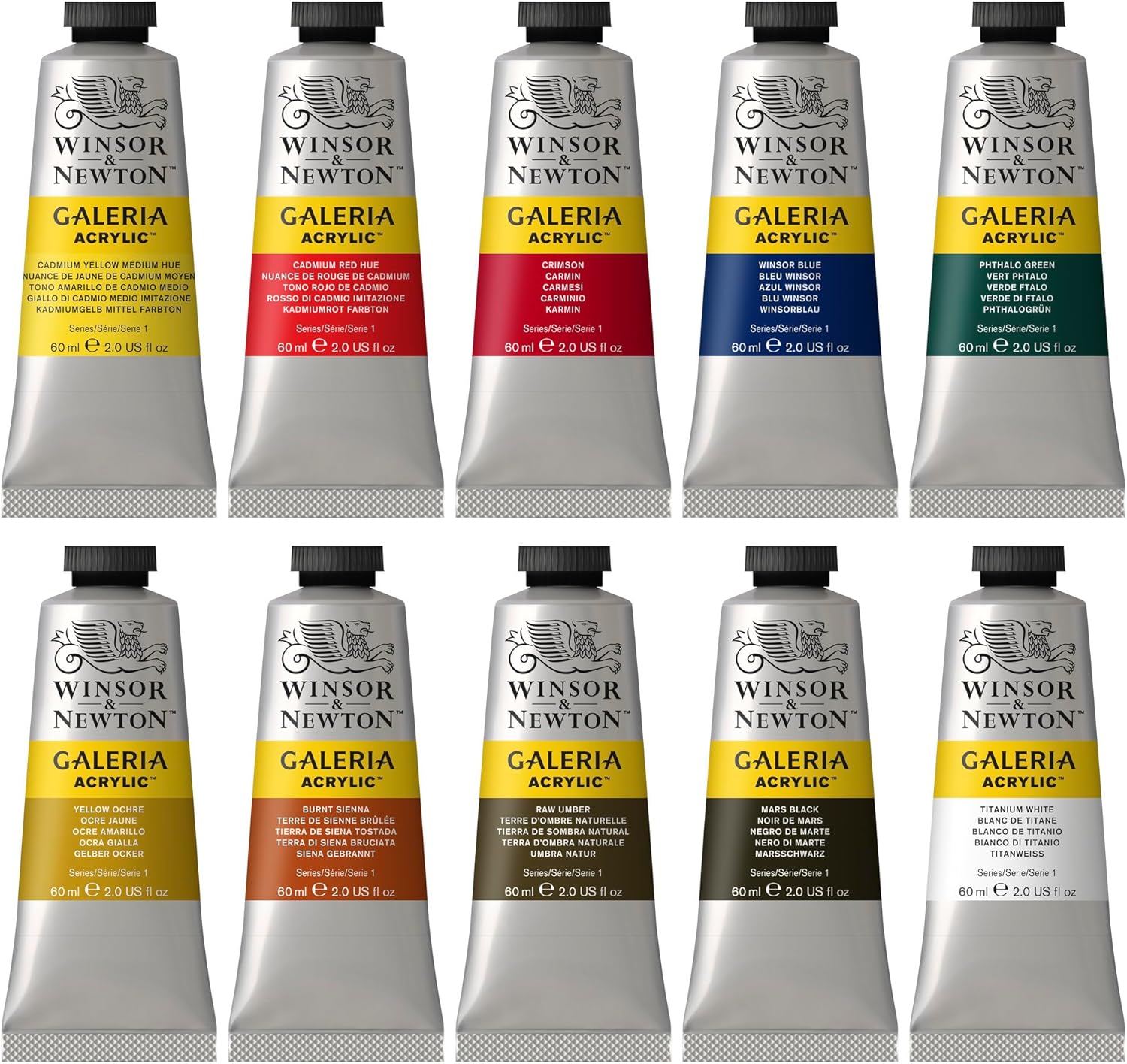
The student-grade vs professional lightfastness gap is real and measurable. Student ranges — Liquitex Basics, Winsor & Newton Galeria — use less pigment, more filler, and frequently substitute cheaper pigments with lower ASTM lightfastness ratings. The Jackson’s Art Supplies acrylic buying guide (jacksonsart.com) explains the ASTM scale clearly: ratings of ASTM I and II indicate colours that will not fade noticeably over 100 years of normal display conditions. Student grades routinely include ASTM III and IV pigments — colours that may shift or fade visibly within a decade under gallery lighting. For work you are selling, gifting seriously, or entering in prizes, professional-grade lightfastness is not optional.
The Clearest Summary
You don’t need both formats yet. Pick the one that matches your current work:
- Texture, knife work, dimensional painting → Golden Heavy Body or Matisse Structure Formula. Budget $150–$200 for a 10–12 tube set. Buy local for restocking reliability.
- Smooth blends, illustration, layering, mixed media → Liquitex Professional Soft Body or Atelier Interactive. Budget $140–$175. Choose Atelier if blending time is your frustration; Liquitex if availability and price are your priority.
- Transitioning from oils and struggling with dry time → Atelier Interactive. The open medium system is a genuine technical solution — artists who use it consistently report it changes their relationship with the medium.
The format you choose now will likely anchor your practice for the next two to three years. That’s a long enough horizon that buying the right body for your actual work — not the most-talked-about brand on social media — is worth the 20 minutes of reading. You’ve just done it.