If you’ve ever had a watercolour wash bloom unevenly, watched your paper buckle into a landscape of ridges, or lost a detailed layer to pilling when you tried to lift colour back out — the paper was probably the culprit, not your technique. Watercolour paper comes in two fundamentally different materials: cellulose paper, made from wood pulp (the same basic stuff as office paper, just processed differently), and 100% cotton paper, made from cotton fibre and sometimes described as “rag” paper. The fibre type determines how the sheet absorbs water, how it holds up to scrubbing, and how long the finished painting lasts before yellowing. This article compares the two categories honestly — including the flagship cotton option most serious painters eventually face, Arches 100% cotton — so you can decide whether the upgrade is the right call for you right now, or whether you’re better served staying on practice paper a little longer.
What the Fibre Difference Actually Means in Practice
Think of cellulose and cotton paper the way you’d think about two different fabrics: cellulose behaves more like a paper towel — it absorbs water quickly, but the fibres swell unevenly and can break down under friction. Cotton behaves more like a dense woven cloth — it accepts moisture more slowly and evenly, the fibres are longer and interlock more tightly, and the surface can take significant reworking without disintegrating.
In watercolour terms, that translates to a few specific technical differences.
Sizing matters here too. Most watercolour papers are treated with gelatin or synthetic sizing — a coating that slows absorption and gives pigment time to settle before it sinks into the fibre. Cotton papers, including Arches, typically carry internal sizing as well as surface sizing, which means the paint sits in the sheet rather than only on it. According to the Jackson’s Art Supplies guide to watercolour paper (jacksonsart.com), this internal sizing is one of the key reasons cotton papers handle wet-on-wet technique and lifting more reliably than cellulose alternatives. Lifting refers to removing wet or dry paint by blotting or scrubbing back to the surface.
Cellulose papers — what the research shows. The Strathmore 300 Series is the reference point for student-grade cellulose. It performs solidly for practice and studies, but the limitation that recurs across aggregated practitioner accounts is direct: it doesn’t absorb as much water as cotton alternatives, which compresses the time window you have to manipulate a wet wash. The Canson XL series sits in a similar position — useful for practice volume, but it does not stand up well to scrubbing and layering. Both of those techniques — glazing (building transparent colour layers over dried paint) and granulation (letting pigment particles separate on the surface for texture) — depend on surface stability that standard cellulose struggles to provide.
Cotton papers — the upgrade signal. Owners of Arches 140 lb (300 gsm) cold press are among the most emphatic reviewers in any watercolour category. The pattern is consistent across practitioner accounts cited by Artists Network in their guide to choosing watercolour paper (artistsnetwork.com): superior absorbency, durability under repeated washes, and a texture that holds pigment in ways that make granulating colours behave predictably. Painters specifically report that the surface “forgives” reworking — you can lift, scrub, and re-wet areas without the surface fibres rolling into pills. The Fingraspuro cotton paper range draws a similar response: no pilling, bright colour retention, and a repeat-purchase pattern that signals ongoing satisfaction rather than a one-off trial.
The Three Tiers: Budget, Mid-Range, and Premium
The market for watercolour paper in Australia breaks naturally into three distinct tiers. Understanding what each tier actually delivers — and where it stops delivering — is the core of making this decision well.
Budget-Tier: Student Cellulose Papers
The Canson XL and Strathmore 300 Series sit here. Both are 300 gsm, both are widely stocked across Australian art suppliers, and both are designed explicitly for high-volume practice rather than finished work. Price per A4 sheet runs roughly AU$0.60–$1.10 depending on format and retailer.
The genuine value of budget cellulose is volume. Early skill development in watercolour — colour mixing, basic wash control, composition instincts — benefits enormously from the freedom to work without hesitation. Expensive paper makes beginners tentative. Cheap paper lets you make ten studies instead of one precious attempt. That’s a meaningful pedagogical advantage in the early stages.
The ceiling arrives when you start working on techniques that require surface manipulation. Repeated wetting degrades the surface sizing on cellulose sheets, and aggressive lifting pills the fibres. Once you’re attempting glazing, sustained wet-on-wet, or correction work, cellulose starts working against you rather than with you.
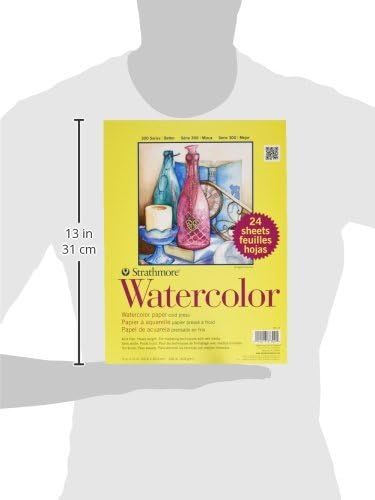
Strathmore
$10.83
In stock on Amazon
Check price on AmazonMid-Tier: Entry Cotton Papers
Fingraspuro cotton paper occupies this space in the Australian market. At roughly AU$1.50–$2.20 per A4 sheet, it costs more than student cellulose but considerably less than Arches. Owner accounts consistently describe it as a meaningful step up: no pilling, more predictable wet-on-wet behaviour, and colour retention that reads as noticeably brighter on the finished sheet.
Fingraspuro is the correct upgrade destination for painters who have outgrown cellulose but aren’t yet producing work they intend to sell or exhibit. It absorbs the risk of working on cotton for the first time — learning how the longer absorption window feels, discovering how granulating pigments behave differently — without committing full Arches prices to that learning curve.
The main limitation in Australia is availability. It is less widely stocked than Arches or the major cellulose brands, which can mean ordering ahead rather than picking it up locally.
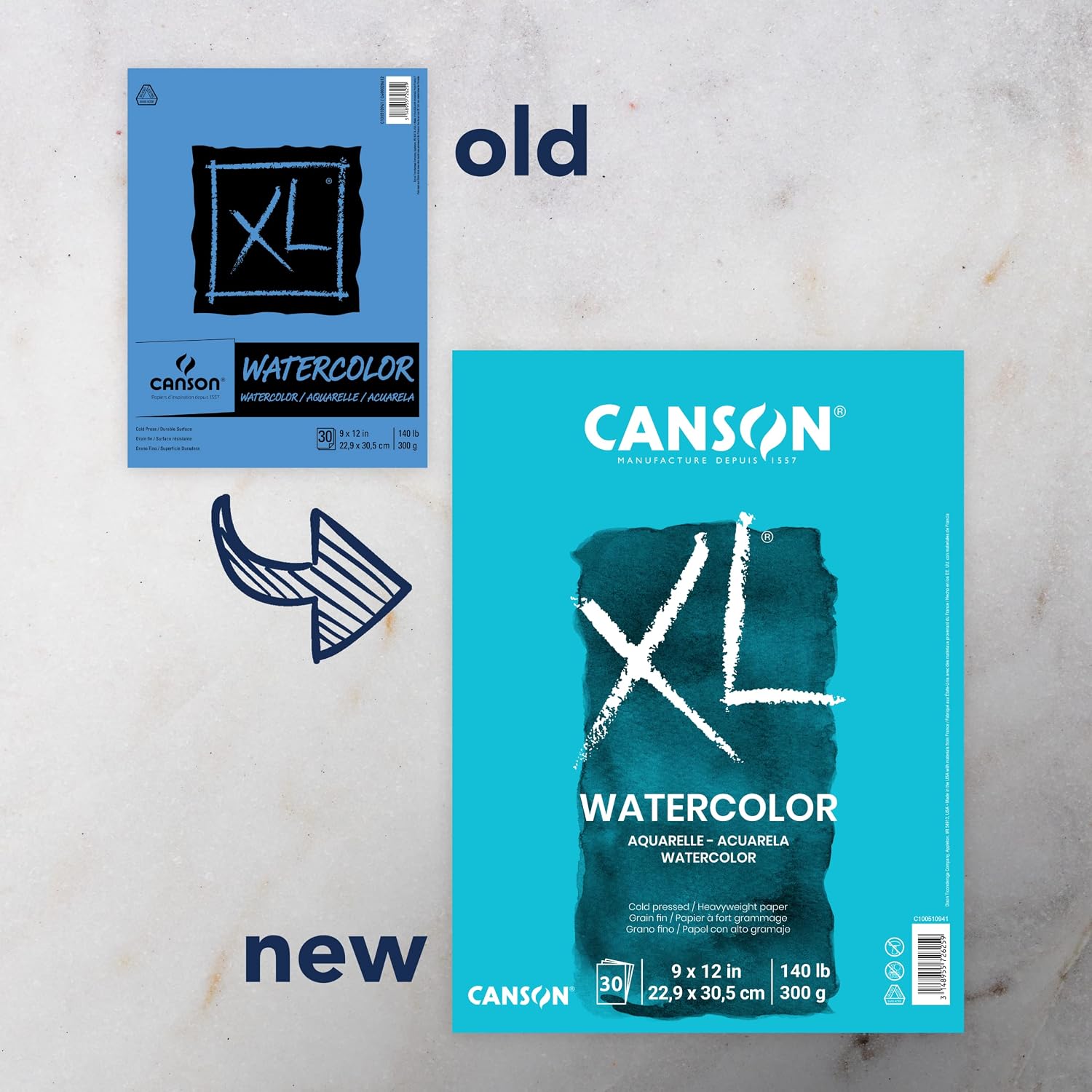
Canson
$11.37
In stock on Amazon
Check price on AmazonPremium-Tier: Arches 100% Cotton
Arches is the benchmark. A 20-sheet block at 300 gsm runs roughly AU$65–$75 in mid-2026, which works out to approximately $3.25–$3.75 per sheet. The internal and surface sizing, the consistency of the cold-press texture across the sheet, and the archival stability of 100% cotton rag all combine to make this the paper most professional watercolourists name when asked what they work on.
The case against using Arches as your primary paper is real, but it isn’t the price arithmetic. The Craft Council of Australia’s Materials and Practice Survey 2024 (craftcouncil.org.au) found that intermediate makers consistently cited “not wanting to waste expensive paper” as a reason to stay on practice stock longer than their skill level warranted — effectively delaying technique development. The paper’s cost becomes a problem when it makes you conservative rather than experimental.
The correct framing is this: Arches is the right choice for finished work, and for technique development once you’ve done the initial cotton learning curve on a mid-tier paper. It is not the right primary surface for anyone still in the fundamentals phase.
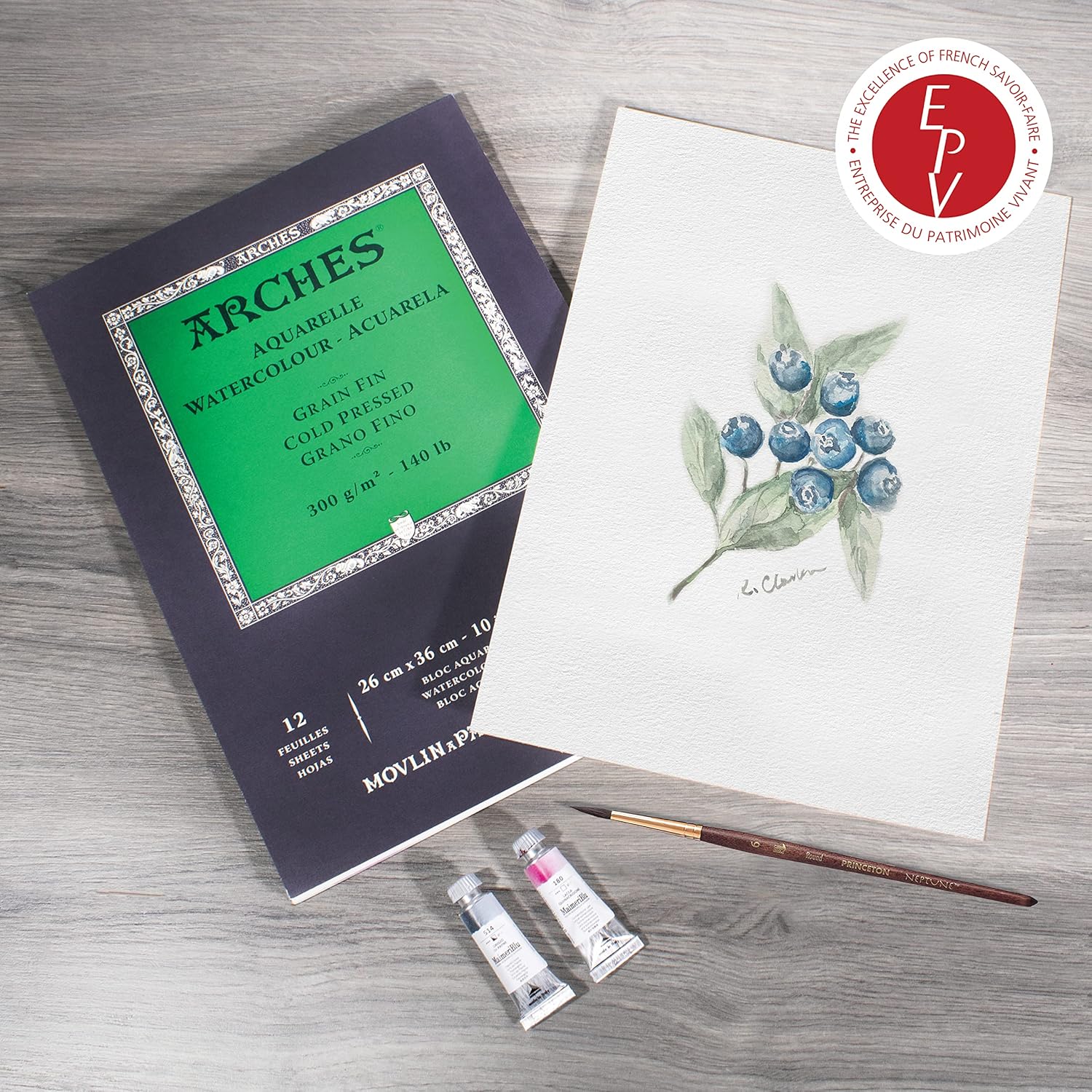
Arches
$23.50
In stock on Amazon
Check price on AmazonThe Techniques That Actually Change on Cotton Paper
This is where the decision becomes less about preference and more about capability. Certain techniques are genuinely difficult to execute on cellulose paper — not because the paper is bad, but because the material physics work against you.
Wet-on-wet washes. Adding wet pigment into an already-wet area requires a predictable absorption rate. On cellulose paper, the window closes faster and the blooms can be jagged or uneven. On cotton, the longer, more consistent fibre network keeps the surface wet longer and the diffusion is smoother.
Multi-layer glazing. Glazing requires laying a transparent wash over a fully dried layer without disturbing what’s underneath. On cellulose, repeated wetting can weaken the surface sizing and cause the lower layer to lift when you don’t want it to. Cotton’s internal sizing keeps each dried layer more stable.
Lifting and correction. Lifting — using a damp brush or damp cloth to remove pigment from a dry or semi-dry passage — depends entirely on the paper’s surface integrity. On cellulose, aggressive lifting pills the surface. On cotton, practitioners consistently report being able to scrub quite hard and return to near-white paper without surface damage.
Granulation and precipitation. Certain pigments — ultramarine, cobalt, many earth tones — separate from the binder and settle into the paper’s texture as they dry, creating visible grain. This effect is more pronounced and more controllable on cotton papers because the texture is more uniform. On heavily sized cellulose, granulation can be unpredictable or flat.
The Maker & Student overview of material upgrades (makerandstudent.com) makes the point plainly: practice paper encourages volume, which is genuinely valuable in early learning. But once you’re working on techniques that require surface manipulation — rather than just laying initial washes — the paper becomes the limiting factor, not your skill level.
Cold Press vs Hot Press: A Quick Orientation
Since this comes up every time paper fibre is discussed: cold press paper has a lightly textured surface — the texture is called “tooth” — and is the most versatile and most commonly recommended starting point. Hot press is calendered smooth under heat and pressure, producing a hard, almost flat surface suited to fine detail, botanical illustration, and ink work. Most intermediate painters working on landscapes, portraits, or abstract work use cold press. Hot press is a deliberate choice for a specific outcome, not a default.
For painters new to cotton paper, cold press cotton is the correct entry point. The tooth makes paint easier to control on a wet surface and gives wet-on-wet work more visual legibility. Hot press requires very deliberate technique — small errors are more visible and corrections are harder.
How to Know When You’ve Outgrown Practice Paper
There is a reliable set of signals. You’ve outgrown cellulose practice paper when:
- You’re losing completed work to the paper, not to your decision-making. If a painting fails because the surface pilled, buckled beyond recovery, or wouldn’t accept a second glaze — that’s the paper, not your technique.
- You’re deliberately avoiding certain techniques. If you’re not attempting wet-on-wet, lifting, or multi-layer work because you know the paper won’t cooperate, the paper is actively limiting your practice.
- You’re finishing paintings you’d want to keep or sell. Cellulose paper yellows over time as the wood pulp oxidises. Archival permanence matters the moment a piece has value beyond study.
- You’re spending more time compensating than painting. Working on difficult paper teaches compensatory habits — rushing washes, avoiding lifting — that are actively counterproductive to develop.
Frequently Asked Questions
Is Arches watercolour paper worth it for beginners? Probably not as your only paper. The psychological pressure of expensive paper tends to make beginners tentative, which is the opposite of what early practice needs. A stronger approach is to use inexpensive cellulose for studies and experiments, and to use one or two sheets of Arches when you want to execute a finished piece where surface quality matters.
Does 100% cotton paper really prevent warping? It reduces warping significantly but doesn’t eliminate it entirely. Heavier weights (300 gsm / 140 lb) warp less than lighter ones. Stretching the paper before painting — soaking it, then taping or stapling it to a board — is still good practice on any weight. Arches and similar cotton papers at 300 gsm are widely reported to handle flat or near-flat without stretching for smaller formats up to A4 or so, which cellulose at the same weight rarely manages.
Is cold press or hot press better for beginners? Cold press, without question. The tooth makes paint easier to control on a wet surface and gives wet-on-wet work more visual legibility. Hot press is a specialist surface suited to specific outcomes — it is not a general-purpose default.
The Decision Rule
Here it is, plainly.
If you’re still building fundamental watercolour instincts — learning colour mixing, basic wash control, composition — stay on reliable cellulose paper like Strathmore 300 or Canson XL. Volume matters more than surface quality at this stage. Keep a small supply of cotton paper for the occasional finished piece.
If you’re working on technique development — wet-on-wet, glazing, lifting, granulation — and you’re regularly losing work to surface failure rather than to creative decisions, switch to cotton paper as your primary surface. Fingraspuro offers a solid, approachable entry into cotton that practitioners consistently report as a meaningful step up without the full Arches price commitment.
If you’re producing finished work you intend to sell, exhibit, or keep long-term, Arches is the correct choice. The archival stability, surface consistency, and depth of practitioner endorsement make it the benchmark for a reason. The per-sheet cost is real; the per-hour-of-painting cost is not.
The upgrade to cotton paper doesn’t make you a better painter. But at the right moment in your development, it stops the paper from making you a worse one.