Watercolour paper is the surface you paint on — and that surface matters enormously. Unlike drawing or sketching paper, watercolour paper is designed to absorb and hold water without falling apart, buckling into a crinkled mess, or bleeding colour unpredictably. The fibre content, thickness (measured in grams per square metre, or GSM), and surface texture all change how paint behaves. At the premium end, you’re buying 100% cotton rag sheets from brands like Arches or Fabriano — archival, beautifully absorbent, and priced to match. At the budget end, cellulose (wood-pulp) pads like Canson XL and Soucolor cost a fraction of the price and invite a completely different relationship with the work: looser, more experimental, less precious. This article is for makers who are six months to two years in and want a clear-eyed answer to the question: when is cheap paper genuinely good enough, and when are you sabotaging yourself by using it?
The short answer is that for high-frequency practice, studies, and colour-mixing experiments, budget cellulose paper is not a compromise — it’s the correct tool. The longer answer involves understanding exactly where the floor is.
| EDITOR'S PICKARTISTIC EYE Watercolor Pad 9x1… | Mid-tierCanson XL Series Watercolor Pad | Budget pickWatercolor Paper Pad 3.5x5.5 In… | |
|---|---|---|---|
| Size | 9x12" | 9x12" | 3.5x5.5" |
| Weight | 140lb | — | 140lb |
| Binding | Glue Bound | Foldover | Spiral |
| Acid-Free | ✓ | — | — |
| Tear-Resistant | — | — | ✓ |
| Price | $19.99 | $11.37 | $8.99 |
| See on Amazon → | See on Amazon → | See on Amazon → |
The Real Case for Budget Paper: The Practice Barrier Is Real
Artists Network, in their guide “Choosing Watercolour Paper: Weight, Texture and Fibre Content Explained,” notes a consistent pattern among developing painters: when paper feels precious, practice frequency drops. This isn’t a willpower problem — it’s a rational response to sunk-cost pressure. If every sheet costs $3–$5, you approach it cautiously, which is the opposite of how you build watercolour intuition.
Owners of budget cellulose pads describe this dynamic directly in aggregated reviews. The recurring theme isn’t praise for technical qualities — it’s relief. A common refrain is that expensive paper “stopped them getting the practice they needed.” That framing is worth sitting with. The psychological cost of a blank premium sheet can be high enough to delay the repetitions that actually build skill.
The Craft Council of Australia, in their document “Supporting Emerging Makers: Material Costs and Access,” observes that lowering material costs — including the perceived cost of using up supplies — directly correlates with practice consistency for developing practitioners. Budget paper resolves this friction point decisively.
The buy-in decision frame: If you’re doing fewer than three sessions a week on average, the economics of cotton paper are arguable either way. If you’re painting daily, running colour-mixing studies, or testing techniques before committing them to good paper, budget cellulose earns its keep immediately.
Comparing the Main Budget Options: Three Distinct Use Cases
Not all budget cellulose pads serve the same purpose equally well. The three strongest performers in this tier each address a different studio need, and choosing the wrong one for your workflow is a common source of buyer disappointment.
H3: The All-Purpose Studio Practice Pad — Canson XL 300gsm
Watercolor
$8.99
In stock on Amazon
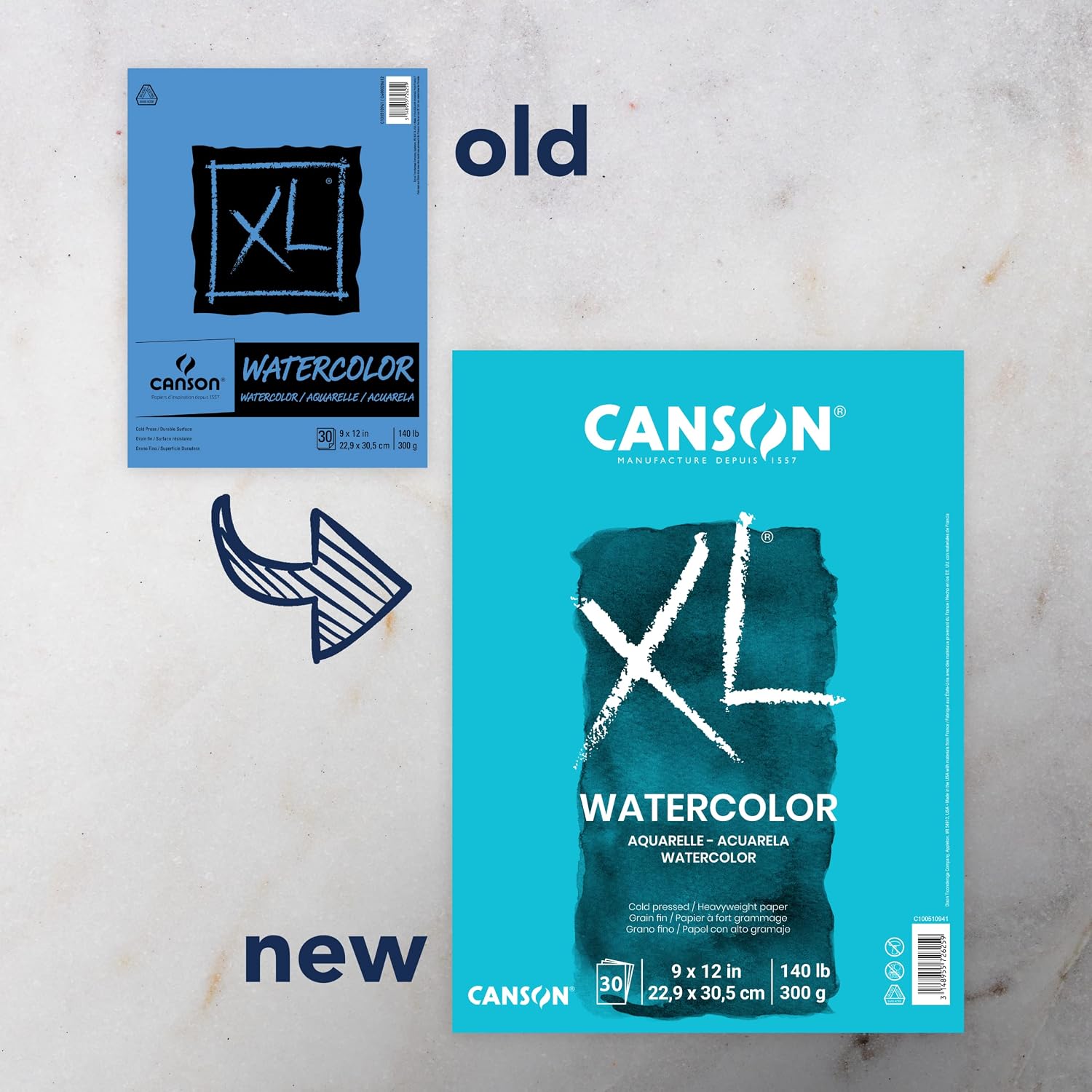
Check price on AmazonCanson XL is a cellulose pad, cold-pressed, at 300gsm. Cold-pressed (also called NOT — meaning Not Hot-Pressed) means a slightly textured surface that holds granulating pigments reasonably well and gives a brush something to grip. At 300gsm, it has enough body to take a wash without immediately warping into a trough.
Jackson’s Art, in their article “The Difference Between Cotton and Cellulose Watercolour Paper,” confirms that cellulose paper at this weight performs adequately for single-layer wet washes and direct painting approaches — the problems emerge when you push it: heavy scrubbing, repeated wet layers, or lifting dried pigment aggressively.
Canson XL’s strongest case is volume. A large-format pad gives you significant sheet count at a price that removes the “precious paper” inhibition entirely. For painters doing high-frequency practice — colour-mixing grids, tonal studies, compositional thumbnails at scale — this is the correct tool.
Where it falls short: Multi-layer glazing and aggressive scrubbing. Cellulose surfaces pill or tear under sustained abrasion. Plan your corrections into the paint layer rather than lifting them out mechanically.
Watercolor
$8.99
In stock on Amazon
Check price on AmazonH3: The Portable Location Pad — Soucolor 300gsm Compact
Watercolor
$8.99
In stock on Amazon
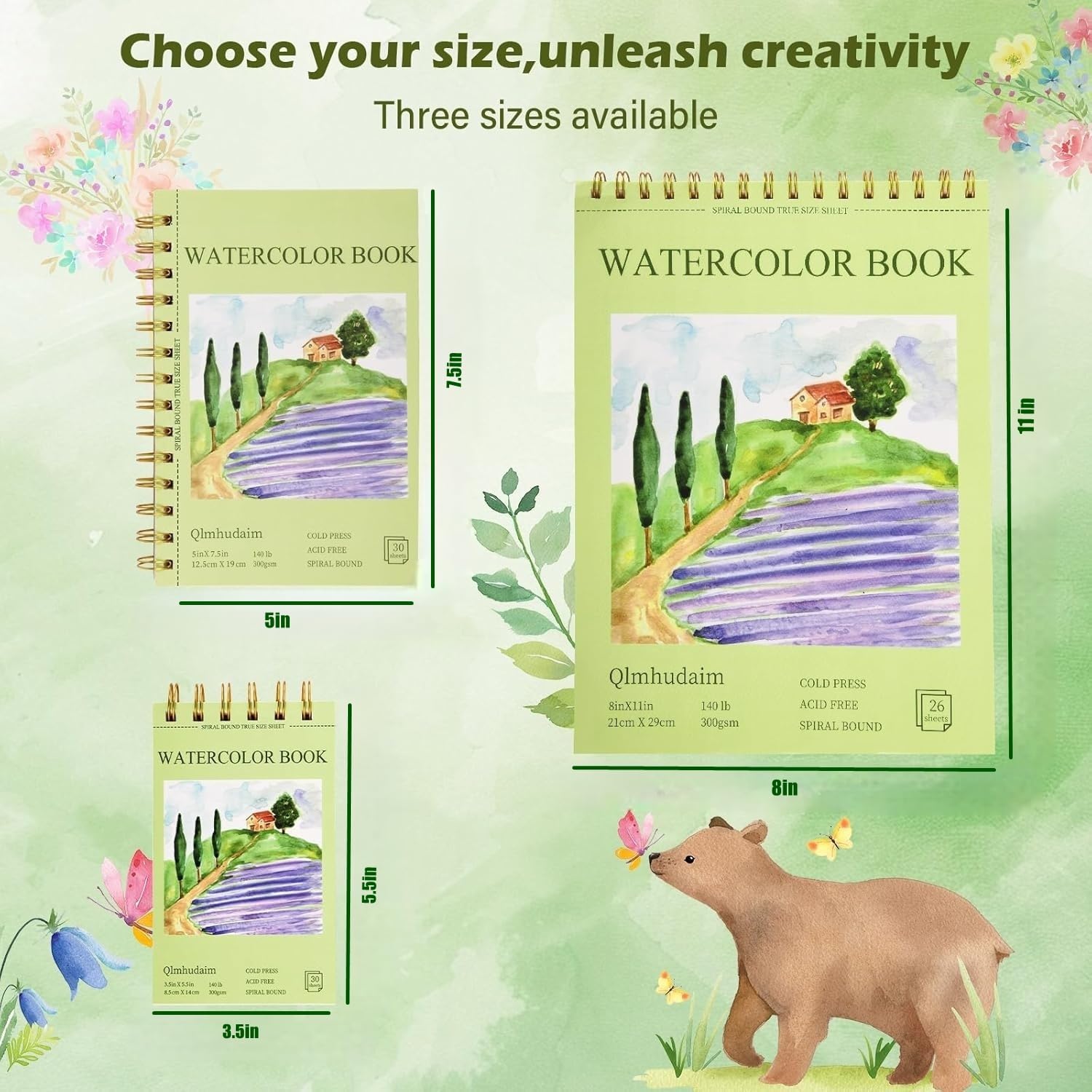
Check price on AmazonThe compact Soucolor 300gsm pad addresses a different bottleneck: portability. Reviewers consistently report using it for location sketching, lunch-break sessions, and travel. The form factor is self-recommending for anyone whose primary obstacle is not having paper with them when a good view or moment of inspiration presents itself.
The Craft Council of Australia’s notes on supporting emerging makers observe that reducing the friction cost of carrying materials is one of the most underrated factors in building a consistent practice. A pad that fits in a bag without planning is not a minor convenience — it’s a session that would otherwise not happen.
Soucolor at 300gsm manages single and double wet layers without catastrophic warping. Several buyers note cutting sheets down from pad size to work even smaller, which is a sound habit: smaller sheets warp less and are easier to stabilise on a travel board or clipboard.
Where it falls short: The same cellulose limitations as any paper in this tier — not suited for heavy technique work. This is a pad for capturing, not for finishing.
Watercolor
$8.99
In stock on Amazon
Check price on AmazonH3: The Mid-Tier Step-Up — Artistic Eye 300gsm (Flat-Stay Performance)
Canson
$11.37
In stock on Amazon
Check price on AmazonThe Artistic Eye pad occupies a slightly higher position in the budget tier, drawing consistent praise for one specific quality: sheets stay flat without taping under moderate wet applications. For context — watercolour paper warps when wet because fibres swell unevenly. The standard solution is taping or stretching paper before painting, which adds time and prep friction.
Paper that stays reasonably flat without this step removes a genuine obstacle. Artists Network’s guidance notes that reducing setup barriers is one of the most effective ways to increase session frequency, particularly for practitioners balancing painting with other commitments. A watercolour teacher citing this in aggregated reviews makes the point practically: flat paper means students can begin work without a stretching tutorial first.
The Wirecutter, in their overview “The Best Watercolour Pads for Beginners and Hobbyists,” treats 300gsm as the practical minimum for serious wet-media work and specifically calls out dimensional stability as a key differentiator within the budget tier. The Artistic Eye pad’s flat-stay performance directly addresses this criterion.
Where it positions: This is the right choice for practitioners who are ready to treat their practice sessions more seriously — longer sessions, more deliberate work — but aren’t yet ready to commit to cotton paper for every piece.
Canson
$11.37
In stock on Amazon
Check price on AmazonPad Format and Binding: A Detail That Changes Everything
Before committing to any pad, it’s worth addressing a structural question that affects usability more than most buyers anticipate: binding format. Watercolour pads come in two main configurations — foldover (spiral or wire-o along the short end, sheets folded back) and top-spiral (spiral along the top edge, sheets open downward).
This sounds minor. It isn’t.
Top-spiral binding allows you to work at any angle without the pad flipping or the unused pages creating drag against your wrist or board. When you’re working wet-on-wet — adding pigment to a still-damp wash — any movement or page instability is a problem that costs you timing. The Fuxi pad draws repeated praise specifically for its top-spiral binding and clean perforations that allow sheets to tear out without edge damage, which matters if you’re keeping finished studies for reference.
Foldover pads work well on a flat surface but become awkward propped at an angle, which many watercolourists prefer for managing blooms and backruns (where wet paint flows in uncontrolled directions). If you paint at an easel or propped board, top-spiral is the more functional format.
| Binding Format | Best For | Main Limitation |
|---|---|---|
| Top-spiral | Angled work, ease of tear-out | Slightly bulkier to transport |
| Foldover | Flat-surface studio work | Awkward propped; page-flip drag |
| Block (glued edges) | Minimises warping without taping | Can’t be used sheet-by-sheet mid-session |
Frequently Asked Questions
Does Canson XL warp badly when wet?
At 300gsm, Canson XL warps noticeably with heavy or repeated wet applications, but not catastrophically with a single controlled wash. The warp becomes significant if you’re doing multiple layers or leaving large wet areas to dry unsupported. The standard mitigation is clipping or taping sheets to a firm board while working — a minor step most watercolourists adopt regardless of paper grade. For loose, single-session work, warping is rarely a serious obstacle.
Can you lift or scrub paint on budget cellulose paper?
Limited lifting is possible — a clean, damp brush can pull back partially dried pigment — but aggressive scrubbing is not this paper’s strength. Jackson’s Art, in “The Difference Between Cotton and Cellulose Watercolour Paper,” confirms that cotton paper’s surface is significantly more durable under abrasion, which is why professional painters rely on it for technique-heavy work. On budget cellulose, plan to lift lightly and sparingly, or build corrections into the paint layer rather than removing them mechanically.
Is top-spiral or foldover binding better for watercolour pads?
Top-spiral is more versatile, particularly for anyone who works at an angle or props their pad. Foldover works well on a flat desk and is often more compact to carry. If you do most painting flat on a table, foldover is fine. If you paint propped, on location, or at an easel, top-spiral removes a recurring frustration. The Fuxi pad’s well-reviewed binding and clean perforations make a strong practical argument for top-spiral specifically.
How many practice sheets do you actually need as a beginner?
More than feels comfortable to admit. Artists Network’s guidance on skill-building in watercolour consistently points to volume of repetitions as the primary driver of technical progress — colour control, edge management, and wet-on-wet timing are all muscle-memory skills that require repeated failure to calibrate. A 50-sheet pad is not excessive for a month of regular practice. Many developing painters report burning through pads faster than expected once they stop treating each sheet as precious.
Is 300gsm budget paper good enough for finished pieces or just practice?
It depends on what “finished” means for your work and where it ends up. For studies, reference sheets, work shared digitally, or pieces given to friends, 300gsm cellulose is entirely adequate. For work intended for sale, exhibition, or long-term archival storage, cotton paper is the professional standard. The Craft Council of Australia, in “Supporting Emerging Makers: Material Costs and Access,” recommends cotton-rag substrates for any work entering a permanent or commercial context, noting that cellulose paper is not rated to archival lightfastness standards and will yellow over decades. The practical working rule: use budget paper to build the painting you want to make, then paint it again on cotton when you know it works.
The Bottom Line: A Clear Decision Frame
Budget cellulose paper is the right choice when frequency matters more than permanence. If you’re building skill, testing colour, studying light, or simply need to paint without the weight of a precious surface under the brush, Canson XL, Soucolor 300gsm, and their peers remove a real barrier and replace it with volume — which is what developing painters actually need.
If your work regularly involves heavy scrubbing, multi-layer glazing, or is destined for sale or long-term display, the math shifts: the technical limitations of cellulose paper will cost you more in compromised results than the price difference justifies.
Use budget paper hard, often, and without guilt. Save your cotton sheets for the paintings you’ve already figured out.