Plein air painting — that’s painting outdoors, directly from observation, rather than working from photos or memory in a studio — has seen a genuine resurgence in Australia over the past few years. And at the heart of that movement is a deceptively simple question: which watercolour set do you actually take with you? Watercolour (pigment suspended in a water-soluble binder, applied to paper) is the dominant medium for location work because it dries fast, needs no solvents, and packs small. But “travel watercolour set” covers everything from a $22 student tin to a $380 handbuilt German palette, and the gap between them isn’t just price — it’s permanence, pigment concentration, and whether your work will still look the same in ten years. This guide breaks down what actually matters when you’re choosing a portable kit, names specific products worth buying in Australia right now, and gives you a clear decision frame to stop second-guessing.
What Actually Separates a Travel Set Worth Buying From One That Isn’t
Before you compare products, you need to understand three selection criteria that professionals consistently cite — and that student-grade marketing consistently buries.
Lightfastness is the measure of how resistant a pigment is to fading under light exposure. The standard used across the industry is the ASTM International rating system, where I and II are considered permanent for artists’ use, and anything rated III or lower fades noticeably within years under normal display conditions. Artists Network’s plein air painting essentials overview notes that lightfastness is the single most important technical attribute for location painters because work made outdoors often documents specific landscapes, seasons, and light conditions that can’t be recreated — a painting that fades is a permanent record destroyed. Student sets frequently include dye-based or fugitive pigments labelled as “hue” colours (e.g. “Alizarin Crimson Hue” instead of Alizarin Crimson) that won’t hold. Check the pigment index code on the pan: single-pigment colours (one Colour Index code like PB29, PY150) are almost always more lightfast and mix more cleanly than multi-pigment mixtures.
Pan vs. tube, and pigment load is the second axis. Travel sets use either pre-filled half-pans (small dried cakes of paint), whole pans, or mini-tubes you squeeze into an empty palette. Higher-quality sets use a greater pigment-to-binder ratio — this is what manufacturers mean when they describe “professional grade.” Schmincke’s published Horadam Aquarell specification sheets put their pigment load materially higher than their own Academy student line; the practical difference is that professional pans reactivate fully with less water and deliver richer washes with fewer strokes, which matters when light is changing fast and you’re working quickly on location.
Palette architecture — the physical form of the tin or case — determines your actual working experience. A built-in mixing area large enough to hold a loaded wash (at least 4–6 mixing wells), a lid that doubles as an additional mixing surface, and a magnetic pan system that lets you rearrange or swap colours are the features that divide a considered outdoor tool from a tourist souvenir.
The Australian Market Reality: Import Costs, Local Stock, and Price Gaps
Here’s where the AU craft market creates specific friction that UK or US reviews won’t warn you about.
By the numbers (May 2026 approximate AU retail):
| Set | Category | Approx. AU RRP |
|---|---|---|
| Winsor & Newton Cotman 12-half-pan tin | Student | $28–$38 |
| Winsor & Newton Professional 12-half-pan | Professional | $95–$130 |
| Schmincke Horadam 12-half-pan | Professional | $180–$230 |
| Daniel Smith Essential Dot Card (travel-configured) | Professional | $55–$75 |
| Mijello Mission Gold 34-half-pan | Professional | $130–$165 |
The gap between AU pricing and UK pricing (using Jackson’s Art London listings as a benchmark, per their public price pages) runs roughly 25–40% once you factor in GST, freight to Australian distributors, and importer margin. This is not price gouging — it reflects genuine logistics. Australia has no domestic manufacturer of professional watercolour at scale, so every tube and pan is imported. The practical upshot: buying a mid-tier set locally and investing in quality paper is often a better outcome than importing a high-end European set independently, where you’ll absorb customs duties on orders over AU$1,000 and uncertain freight timelines.
Local stockists worth knowing: Art Spectrum (national, strong Winsor & Newton range), Jackson’s Art Australia (good European brand depth), Eckersley’s (accessible entry and mid-tier), and specialty suppliers like The French Art Shop in Brisbane carry Schmincke and Sennelier stocks that aren’t always easy to find at national chains. Walker Ceramics and similar specialty arts suppliers aren’t typically in the watercolour space, but their model — where you phone ahead to confirm stock before driving — applies equally to serious watercolour sourcing in capital cities. Regional makers should assume 5–10 business days for freight and factor that into project timelines.
Four Sets Worth Serious Consideration, and Who Each One Is For
Winsor & Newton Cotman 12-Half-Pan Field Plus Set — The Honest Entry Point
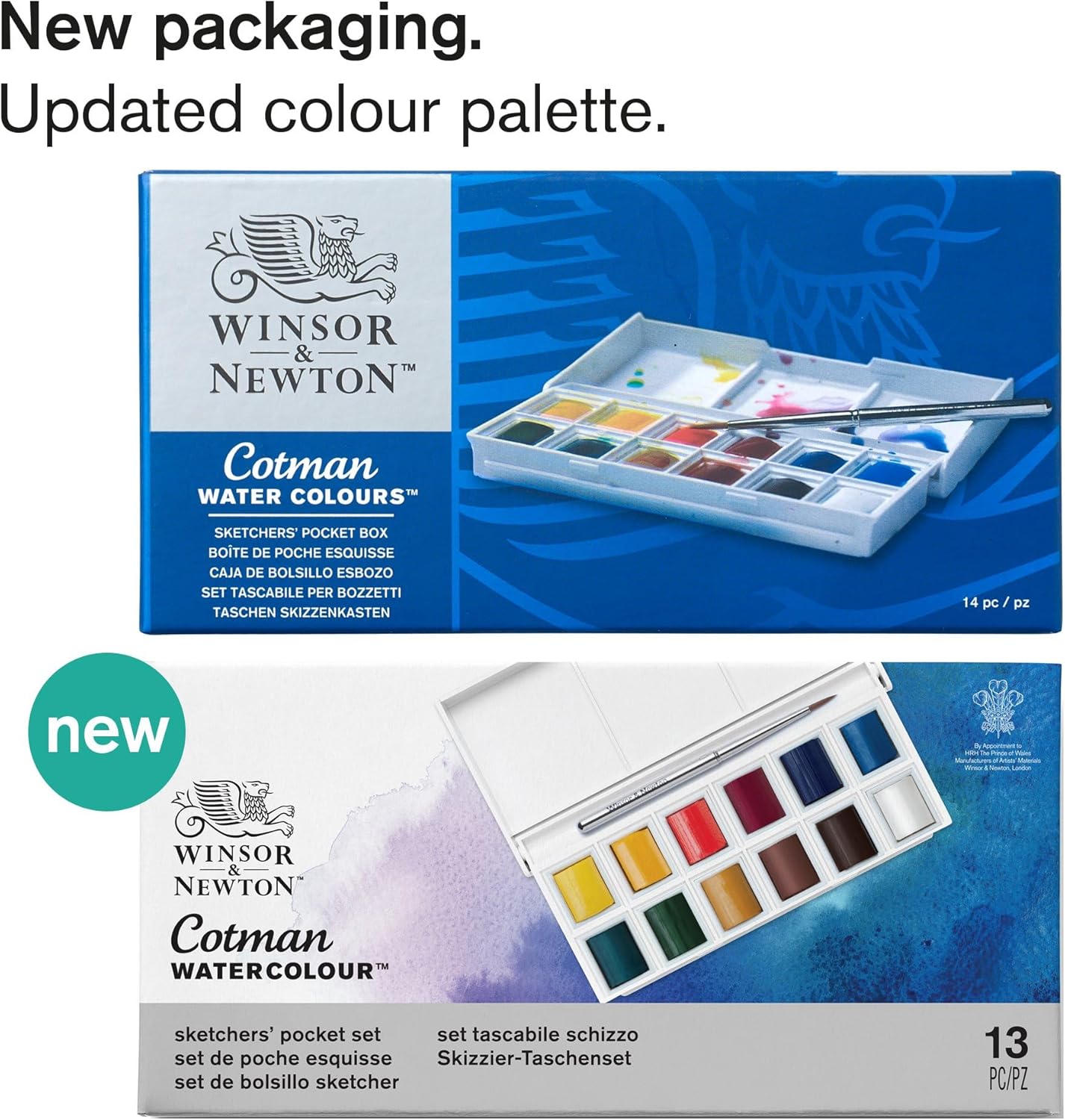
For painters who are committing to regular outdoor practice for the first time, the Cotman 12-half-pan tin remains the most defensible starting recommendation in Australia. The Cotman line uses some single-pigment formulations and performs better on lightfastness than most comparably priced student ranges — Winsor & Newton’s own published lightfastness data (available on their product specification pages) shows the majority of Cotman colours rated ASTM II, which is unusual at this price tier. The tin includes a built-in brush, a small mixing area, and the half-pan format is standard-size, meaning you can swap in professional half-pans later as your colour requirements develop. Reviewers across Australian craft communities consistently note the Cotman set as a reliable first investment that doesn’t lock you out of future upgrades.
If X, then Y: If you’re spending under $50 and want a set that won’t embarrass your work if you decide to exhibit or sell, this is the one.
Winsor & Newton Professional Watercolour 12-Half-Pan Metal Box — The Step-Up That Earns It
The jump from Cotman to Winsor & Newton’s Professional line is the most frequently debated upgrade question in intermediate plein air circles, and the answer is: yes, it’s worth it, but understand what you’re paying for. Professional grade uses single-pigment formulations across nearly the entire range, higher pigment concentration, and Winsor & Newton’s published ASTM ratings show predominantly Series I lightfastness. Artists Network’s overview of professional watercolour criteria specifically cites the W&N Professional range as a benchmark for pigment transparency and wash consistency. The 12-half-pan metal box is compact enough for a jacket pocket and the lid mixing area is workable for single-colour washes. The limitation — and it’s a real one — is that 12 colours forces ruthless palette discipline, which is actually a feature for many plein air painters rather than a bug.
If X, then Y: If you’re selling work, entering exhibitions, or documenting landscapes you care about long-term, the Professional line is where lightfastness anxiety ends.
Schmincke Horadam Aquarell 12-Half-Pan Tin — The European Benchmark
Schmincke’s Horadam line occupies the position of “best widely-distributed professional option” in most serious watercolour conversations globally, and the published specs back it up. Schmincke’s own specification sheets list pigment load figures above most competitors and their colour range includes some formulations (particularly in the granulating earth tones) that are genuinely difficult to replicate with other brands. The lightfastness ratings across the Horadam range are consistently ASTM I–II. The tradeoff in Australia is price and availability: at AU$180–$230 for 12 half-pans from reliable local stockists, this is a considered purchase. Jackson’s Art’s buyer guide notes the Horadam range as consistently recommended by instructors in Europe and the UK for its reactivation performance in field conditions — the pans don’t skin over in the same way cheaper sets can.
If X, then Y: If you’re an experienced painter who knows your palette preferences and wants the best European professional option stocked in Australia, Horadam is worth saving for.
Daniel Smith Essential Dot Card + Empty Palette System — The Flexible Professional Option
Daniel Smith’s approach to the travel market is philosophically different: rather than selling a pre-filled tin, they sell dot cards (small dried pigment samples on card) and a range of empty travel palettes you fill yourself with tubes or dots of your chosen colours. The Craft Council of Australia’s maker survey on portable practice tools flagged self-curated palettes as a growing preference among experienced location painters who find pre-configured sets include colours they never use. Daniel Smith’s pigment range is exceptionally broad by professional standards and their published lightfastness data is unusually granular — they rate individual pigments, not just colour names, which is the approach serious painters should expect from a professional supplier. The entry cost is manageable (dot cards start under AU$75), but the full system requires more initial setup time.
If X, then Y: If you already know your preferred colours and want a compact, permanent professional palette built exactly to your working practice, Daniel Smith’s build-your-own approach beats every pre-filled tin at the same price point.
Paper: The Variable That Defeats a Good Set
No travel watercolour set outperforms its paper, and this is where Australian makers routinely undersell themselves. Plein air work benefits specifically from cold-pressed (textured) paper at 300gsm (grams per square metre — a measure of paper weight and thickness) or above; below this weight, paper buckles badly when wet, which distorts washes and makes flat colour areas blotchy. Fabriano Artistico and Hahnemühle Aquarell are the two most cited professional standards in Australian fine art retail. Both are available through Eckersley’s and specialty suppliers nationally. A pad of 300gsm cold-press in A5 or A4 format is the minimum working surface worth pairing with a professional-grade set.
The cost-per-sheet math on professional paper is often the surprise: good 300gsm watercolour blocks run AU$35–$70 for 20 sheets, which is $1.75–$3.50 per sheet — less than most painters expect, and trivial relative to the cost of a professional paint set used on bad paper.
The Decision Frame
Run yourself through this:
- Under $50, first outdoor kit: Winsor & Newton Cotman 12-half-pan. Replace it when you’ve filled it twice.
- $100–$135, committed practice or occasional sales: Winsor & Newton Professional 12-half-pan. This is the point where lightfastness becomes a real professional obligation, not a theoretical one.
- $180–$230, serious exhibition or landscape documentation work: Schmincke Horadam. Budget the extra $20–$30 for freight if your local stockist is out of your preferred colours.
- Any budget, strong existing palette preferences: Daniel Smith dot card and empty palette. It takes an afternoon to set up and then it’s exactly what you need.
In every case: pair with 300gsm cold-press paper and a single quality brush (a size 10 or 12 round from Escoda, da Vinci, or Princeton Neptune handles most plein air work). The paint is the smallest part of your outdoor practice’s success. The largest part is showing up.