Watercolour paper is, at its core, exactly what it sounds like: paper made to hold water. But not all watercolour paper is made the same way, and the difference between a frustrating session and a flowing one often comes down entirely to what’s sitting on your board — not what’s in your brush. Two primary material types dominate the market: cotton rag paper, made from cotton fibre (the same raw material as high-quality fabric), and cellulose paper, made from processed wood pulp (the same base as most office printer paper, though far more refined). Cotton paper holds more water, dries more slowly, and lets you lift or rework wet paint repeatedly. Cellulose paper is less expensive, dries faster, and does an acceptable job for practice — but fights back if you push it. This article will help you understand the practical difference, name the products worth buying at each stage, and give you a clear decision rule so you stop second-guessing your paper and start painting.
Why the Fibre Difference Isn’t Just Marketing
The structural difference between cotton and cellulose paper shows up the moment paint hits the surface — but understanding why helps you make smarter buying decisions.
Cotton fibre is naturally longer and more irregular than wood-pulp fibre. Under a loupe, 100% cotton watercolour paper looks almost textile-like: a mesh of interlocking fibres with genuine porosity between them. That structure absorbs water deeply and evenly, which gives you the “open” working time that watercolour technique depends on. You can drop wet paint into a wet wash, come back five minutes later, lift colour with a damp brush, or scrub lightly to reclaim highlights — and the paper holds its shape.
Cellulose paper, even high-quality cellulose like you’ll find in a decent Canson or Strathmore pad, has shorter, more uniform fibres. The surface sizing (a gelatin-like coating applied during manufacture to control absorbency) does a lot of the heavy lifting. It works — genuinely works — for early-stage practice and loose sketching. But the sizing is more fragile than the fibre itself. The moment you scrub aggressively or lay multiple wet layers on a wet surface, reviewers consistently report pilling: the surface fibres ball up and detach, dragging dried pigment with them and leaving an irreparably rough patch. Jackson’s Art Supplies, in their editorial guide to watercolour paper (jacksonsart.com), confirms that surface disruption under heavy reworking is the primary technical limitation of wood-pulp watercolour papers.
The Artists Network editorial on choosing watercolour paper (artistsnetwork.com) phrases the distinction clearly: cotton paper behaves like a sponge that lets you paint on it, while quality cellulose paper behaves like a coated surface that holds paint above it. Both descriptions are accurate. The question is which behaviour your current technique demands.
The Honest Hierarchy: Three Tiers Worth Understanding
Budget Tier: Cellulose Papers for Practice and Volume
Canson XL (300gsm, cold press) is the consensus pick for functional practice paper across aggregated reviewer feedback, including commentary published on Maker and Student (makerandstudent.com) in their surface comparison series. It handles moderate wet-on-wet layering, accepts flat washes without catastrophic buckling at 300gsm, and is priced accessibly enough in Australian art stores that you can afford to actually use it. Reviewers are consistent about one boundary: heavy scrubbing causes pilling, and aggressive wet-into-wet layering pushes the sizing past its limit. For loose colour studies, sketching, testing palette mixes, or working with students — it’s genuinely appropriate.
Strathmore 400-series pads are positioned by a strong pattern of reviewers as a college and student workhorse: reliable and consistent, but mid-table for pure watercolour. They perform solidly for gouache or mixed-media work where watercolour isn’t the primary medium. For pure watercolour practice at intermediate level, most reviewers who’ve tried both recommend spending the same money on more Canson sheets instead.
One recurring reviewer observation worth naming directly: a pattern of early practitioners report buying cheap cellulose paper, finding it unforgiving, wasting sheets quickly, and then practising less because they felt guilty about the waste. The economics backfire. If the paper punishes you every session, you adjust your behaviour — and not in the right direction.
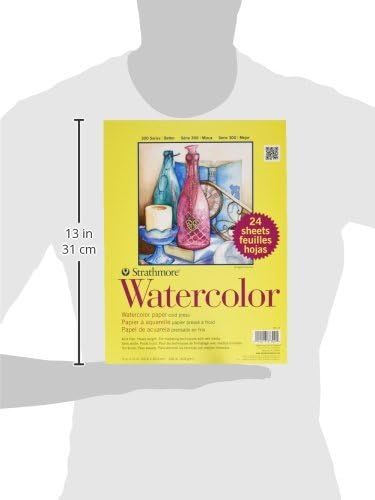
Strathmore
$10.83
In stock on Amazon
Check price on AmazonMid Tier: Cellulose Blends and Transition Papers
The Artistic Eye pad draws repeated praise from watercolour teachers who reorder it consistently for classroom use. The surface reportedly handles beginner-to-intermediate techniques with enough forgiveness to be encouraging, without the premium cost of fully cotton stock. Maker and Student’s paper review archive notes it as one of the more dependable classroom-supply options available through Australian art retailers, sitting meaningfully above generic house-brand pads in surface quality and consistency.
At this tier, the value proposition is clear: you’re paying for a more forgiving sizing and a heavier sheet than budget cellulose offers, without yet committing to cotton pricing. For practitioners who are working through technique fundamentals but want the paper to stop actively fighting them, the mid-tier cellulose blend is a sensible transition stage.
The Craft Council of Australia, in their Supporting the Serious Maker resource overview (craftcouncil.org.au), notes that material quality at the practice stage has a measurable effect on skill retention — a principle that maps directly onto the paper question. Using paper that teaches you the wrong lessons about how the medium behaves is a genuine obstacle to development, not just an inconvenience.
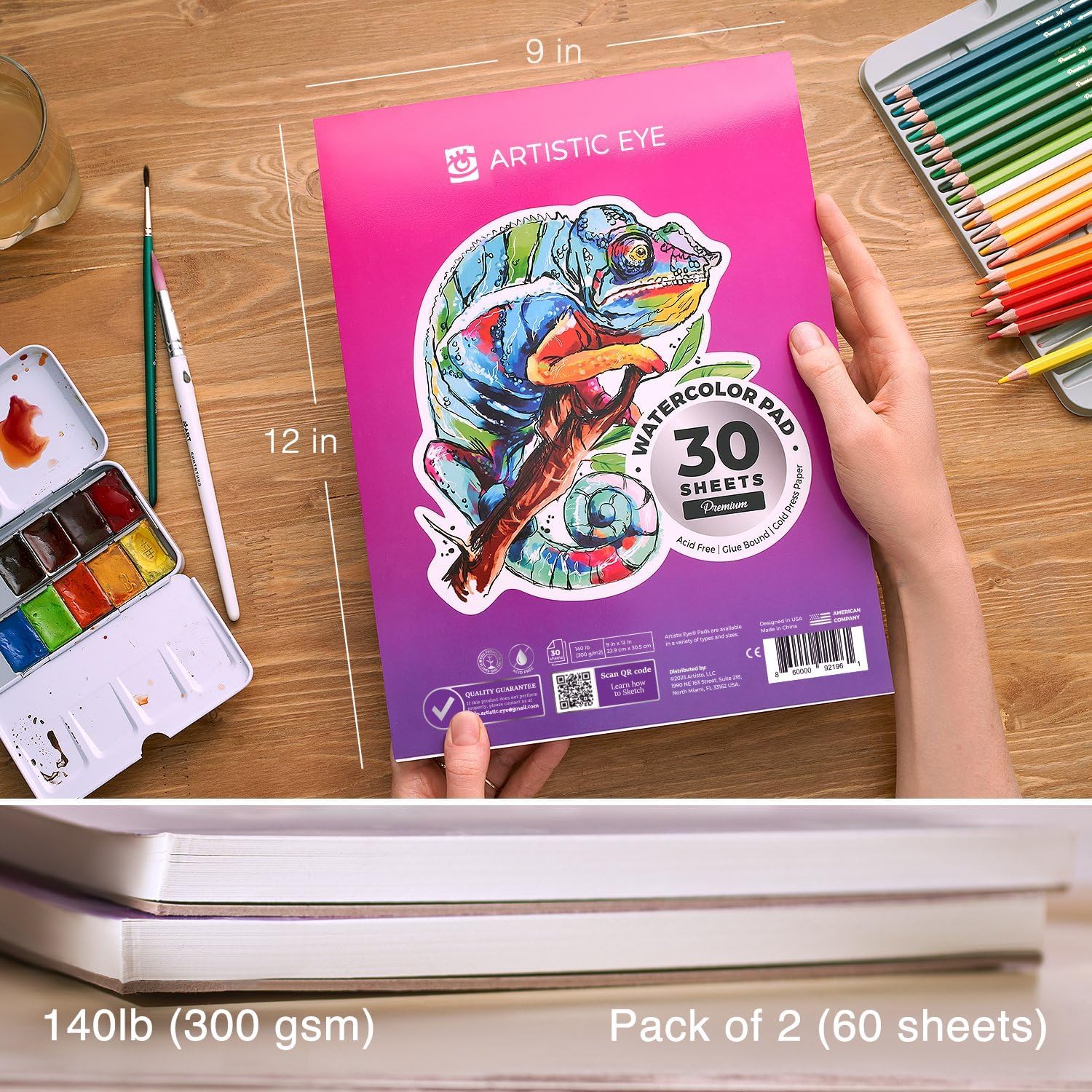
ARTISTIC
$19.99
In stock on Amazon
Check price on AmazonPremium Tier: 100% Cotton Papers
Fabriano Artistico (100% cotton, available in 300gsm and 640gsm) earns consistent praise for its forgiving surface and good pigment lift. Reviewers describe it as easier to work wet-into-wet than some stiffer cotton stocks, with a surface that recovers well from light scrubbing. It’s positioned as the sensible entry point into true cotton territory — premium behaviour without the most elevated price points in the category.
Arches (100% cotton, mould-made in France, 300gsm cold press being the most widely reviewed format) earns the strongest superlatives of any paper across review aggregations. What’s notable is the specificity of the praise: reviewers don’t just call it good for watercolour. They note it handles dip pen and pencil over dried washes without catching or tearing, that it lifts cleanly with a stiff brush even after full drying, and that colour appears more luminous on its surface than on cellulose equivalents. The Artists Network editorial on paper selection (artistsnetwork.com) cites Arches as the benchmark professional surface against which others are typically measured.
The product that earns the most striking specific language across reviewer patterns is the Finetec 100% cotton cold press paper — described by one reviewer as “practice paper that behaves like professional paper.” That phrase captures something real: it’s positioned and priced below Arches, but the cotton fibre gives it the same fundamental working properties. For an intermediate practitioner who wants to build technique on a proper surface without committing to Arches pricing across every session, this is the gap-filler the market needed.
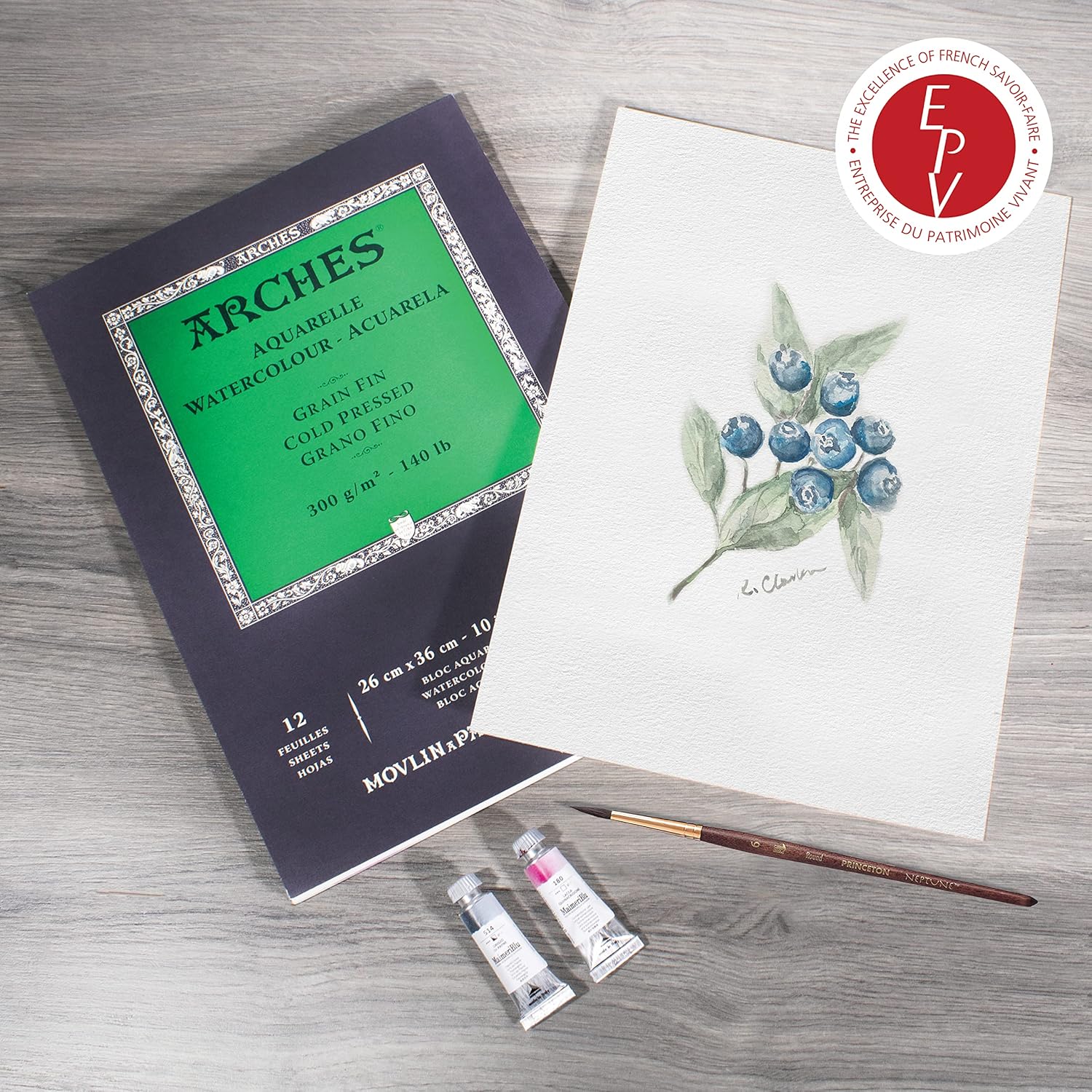
Arches
$23.50
In stock on Amazon
Check price on AmazonBy the Numbers
| Paper | Fibre | GSM | Rework/Lift | AU Price Tier |
|---|---|---|---|---|
| Canson XL | Cellulose | 300 | Low–moderate | $ (budget) |
| Strathmore 400 | Cellulose | 300 | Low–moderate | $ (budget–mid) |
| The Artistic Eye | Cellulose blend | 300 | Moderate | $$ (mid) |
| Fabriano Artistico | 100% Cotton | 300–640 | High | $$$ (premium) |
| Arches Cold Press | 100% Cotton | 300 | Very high | $$$–$$$$ (premium–pro) |
Price tiers reflect 2026 AU retail conditions. Cotton papers carry a freight premium in Australia relative to UK/EU pricing — budget approximately 15–25% above UK RRP for mould-made European stocks.
Cold Press vs Hot Press: The Surface Texture Question
This comes up constantly in beginner discussions, and it’s worth settling once.
Cold press (sometimes labelled NOT, for “Not Hot Pressed”) has a moderately textured surface — you can feel the slight grain when you run a finger across it. That texture catches the granulating pigments that make watercolour luminous, creates sparkle in a loose wash, and gives wet paint somewhere to move. It’s the default for most watercolour work and the surface in almost every beginner and intermediate tutorial you’ll encounter.
Hot press paper goes through heated rollers that compress the surface to near-smooth. Paint sits on top rather than pooling in texture, which makes it ideal for fine detail work, botanical illustration, pen-and-wash, and any technique where you want the pigment to flow without texture interruption. The tradeoff: wet washes can be harder to control because there’s no texture to anchor them, and the smooth surface is less forgiving of overworking. Jackson’s Art Supplies’ editorial guide to watercolour paper (jacksonsart.com) notes that most practitioners find cold press more versatile until they’ve developed the brush control that hot press rewards.
Rough press — the third option you’ll see on premium stocks — has more pronounced texture than cold press, dries with a rougher broken edge on brushstrokes, and is primarily a specialist surface for expressive or gestural watercolour styles.
Frequently Asked Questions
What is the practical difference between cotton and cellulose watercolour paper for a beginner? Cotton paper holds water longer, lets you rework wet paint, and recovers from scrubbing without the surface breaking down. Cellulose paper is more affordable but punishes repeated reworking — the surface pills and becomes unusable. For a true beginner, high-quality cellulose like Canson XL is a sound starting point, but understanding the limitation helps you avoid blaming your technique for the paper’s constraint.
Does 300gsm paper always mean the paper won’t warp? No — and this is one of the more persistent misunderstandings in beginner discussions. 300gsm refers to weight (grams per square metre), which is a reasonable indicator of paper thickness, but warping depends on fibre type, sizing, and how the paper is secured. Reviewers consistently note that 300gsm cellulose paper will warp under heavy wet washes unless it’s taped or clipped to a board, while 300gsm cotton paper — because its fibre holds moisture more evenly — warps less aggressively. Heavier 640gsm blocks warp least of all. Stretching or using a gummed watercolour block is still recommended for large wet washes regardless of weight.
Can you lift and scrub paint on Canson XL the way you can on Arches? Not equivalently. Light lifting on a damp Canson surface is possible, and reviewers describe it as acceptable for modest corrections. But the deep, repeatable lift that Arches allows — scrubbing back to near-white with a stiff brush after full drying — is a function of cotton fibre, not sizing, and cellulose cannot replicate it. The Canson surface also pills under hard scrubbing, which Arches does not.
Is Arches paper worth the extra cost for someone still learning? It depends on what you’re optimising for. If you’re drilling fundamentals through volume — doing ten washes a session, testing colour mixes, exploring techniques — Canson XL is the economically rational choice. If you’re working on pieces you intend to keep, frame, or sell, or if you’re finding that the paper is limiting your understanding of how the medium behaves, moving to Arches or a cotton mid-tier like Fabriano Artistico will genuinely accelerate your intuition. The reviewer pattern is clear: the moment practitioners first work on proper cotton paper, months of perceived technique problems are frequently reframed as paper problems.
What does cold press vs hot press actually mean for how paint handles? Cold press has texture that catches pigment granules and gives wet paint something to anchor in — it’s more forgiving, more luminous with granulating pigments, and the standard surface for most watercolour styles. Hot press is near-smooth: paint flows freely and detail is crisper, but controlling wet washes is harder and the surface is less forgiving of overworking. Start on cold press; move to hot press when you want more precision and have the brush control to manage it.
The Decision Rule
If you’re running through paper for practice, drilling washes, or stocking a class: Canson XL 300gsm is the right answer. It’s functional, honest about its limits, and priced so you’ll actually use it.
If you’re building technique on pieces you care about, experiencing repeated frustration with reworking, or preparing work for sale or exhibition: move to 100% cotton. Fabriano Artistico is the sensible entry into cotton territory. Arches is the answer when you want the surface to stop being a variable entirely.
The Finetec 100% cotton paper sits between those two poles — reviewers describe it as cotton behaviour at a price point that makes daily practice on proper fibre feel financially sustainable. That’s the gap worth exploring if you’re in the middle of the transition.
The maker community consensus, as synthesised across the Artists Network editorial archive (artistsnetwork.com), Jackson’s Art Supplies’ paper guide (jacksonsart.com), and the Maker and Student review series (makerandstudent.com), is consistent: the fibre under your paint is not a detail. It’s the decision that makes every other decision about pigment, brush, and technique either legible or opaque. Get it right, and you’ll stop wondering what you’re doing wrong.